
View my Google Scholar profile
View my ORCID profile
Binde, P. (2024). The complex relationship between return-to-player percentage and problem gambling: A literature review and analytical framework. Journal of Gambling Issues, Advance online publication. https://doi.org/10.4309/EDYF9015
Some gambling companies, regulatory authorities, and researchers consider a high return to player (RTP) percentage to be a risk factor for problem gambling (PG). If this is true, regulating RTP level could play a crucial role for preventing PG. However, there are no empirical studies confirming this assumption. The aim of this article is to review the literature and on basis of that discuss in what ways and to what extent RTP percentage might relate to the risk of PG. The method used is inductive reasoning based on the synthesis of earlier research, consideration of general theories on gambling behavior, and observations regarding gambling markets. The discussion is facilitated by a proposed analytical framework for understanding and exploring the complex relationship between RTP and PG. The main result the analysis is that high RTP forms of gambling are associated with PG primarily because of well-known PG risk factors that are commonly co-occurring with high RTP, such as rapid game frequency, high play continuity, and conspicuous sensory stimuli stimulating gambling. RTP in these forms of gambling cannot be significantly lowered because it would be commercially unviable. In forms of gambling in which RTP is relatively low but can be substantially increased, this may have effects that both heighten and lower the risk of PG. None of these effects are likely to be strong and might cancel each other out. The conclusion is that high RTP alone does not significantly contribute to the risk of PG.
> Read the article (open access)
Wall, H., Wennberg, P., Binde, P., & Molander, O. (2024). Systematic assessment of gambling type involvement: Reliability and validity of the Gambling Disorder Identification Test (GDIT). Journal of Gambling Studies, Advance online publication. https://doi.org/10.1007/s10899-024-10345-z
Gambling type involvement, both in terms of participation (engagement in specific gambling types) and diversity (how many gambling types an individual engages in), is a key feature to address in gambling self-report measures, but such systematic measurement procedures are scarce. The aim of this study was to test the psychometric performance of the gambling type assessment in the recently developed Gambling Disorder Identification Test (GDIT), in terms of test-retest reliability, convergent validity, and patterns of gambling diversity, among help-seeking and general population gambling samples (total n = 603). Overall, online gambling was more commonly reported as problematic than land-based gambling. Retest reliability varied for specific gambling types (ICC range 0.32–0.64, rtet range 0.66–0.85). In terms of gambling participation, online gambling showed stronger correlations with GDIT total score (i.e., symptom severity) than land-based gambling, where Slots showed the strongest correlation (r = 0.52), followed by Casino table games (r = 0.25), Sports and Horse betting (r = 0.16 and r = 0.14, respectively), and Poker (r = 0.14). Lotteries showed no correlation with GDIT total score (r=-0,01). For Slots gambling, all gambling diversity levels (including Slots as a single gambling type) were on average associated with the highest diagnostic severity level (GDIT total score > 30; severe gambling disorder). Finally, explorative configural frequency analysis identified typical and antitypical gambling diversity patterns. The result from the current study corroborates findings that engagement in specific gambling types matter, and that such features should be included in gambling measurement. We conclude that the GDIT is a reliable and valid measure for systematic assessment of gambling type involvement. The GDIT can be used to assess gambling participation and diversity, as part of a broad measurement setup for problem gambling and gambling disorder.
> Read the article (open access)
Binde, Per (2022). A bibliography of empirical studies on gambling advertising (5th ed.). Gothenburg, Sweden: OnGambling.org
The aim of this bibliography is to list all works that present empirical studies of gambling advertising. The fifth edition (December 2022) includes 176 works focusing on gambling advertising. In a separate section, the bibliography lists 58 works on broader topics, but which include research results relating to gambling advertising.
Binde, P., Cisneros Örnberg, J., & Forsström, D. (2022). Violating trust: A study of court verdicts in cases of gambling-driven economic crimes in the workplace. Nordic Journal of Criminology, 23(2): 212-230. https://doi.org/10.1080/2578983X.2022.2139473
This study investigated trust-violating economic crimes committed in businesses and at public and non-profit organizations by employees with problem gambling. Verdicts delivered by the Swedish general courts over a five-year period (N = 283,884) were subject to a keyword search, and verdicts matching the search criteria (n = 1,232) were examined in detail, identifying 62 such cases. A notable finding was that middle-aged women with no previous criminal record were overrepresented compared with women in national statistics on crimes in general. Non-profit organizations and public services were relatively ineffective in detecting gambling-driven trust-violating crimes. The implications of our findings for criminological theory are discussed; the results lend support to Donald Cressey’s theory of trust-violating crime as driven by a non-shareable problem and agree with the ‘fraud triangle’ conceptualization. We conclude that although these gambling-driven crimes are relatively rare, the risk of them occurring should not be ignored by businesses and organizations as the consequences can be severe and, for small businesses, sometimes devastating.
> Read the article (open access)
Binde, P., Cisneros Örnberg, J., & Forsström, D. (2022). Criminogenic problem gambling: A study of verdicts by Swedish courts. International Gambling Studies, 22(3): 344-364. https://doi.org/10.1080/14459795.2021.2002383
This study explored the characteristics and consequences of criminogenic problem gambling in Sweden. All verdicts (N = 283,884) delivered by Swedish general courts between 2014 and 2018 were subjected to a key word search for the term ‘problem gambling’ and its synonyms. Verdicts that met the search criterion (n = 1,232) were inspected manually and cases in which problem gambling clearly was the main cause for committing crime (n = 282) were analyzed quantitatively. The most common types of crimes were fraud and embezzlement (67%). Each year around 400 individuals, companies, and organizations became victims of gambling-driven crimes, with nonprofit organizations being the most severely affected. Those convicted for such crimes were older, and to a greater extent female and first-time offenders, compared to national statistics on crimes in general. This suggests that in Sweden, middle-aged women are a high-risk group for severe gambling problems that should be monitored particularly closely by gambling companies for indications of problematic gambling. We conclude that although crimes driven by problem gambling are relatively rare in the justice system, they bring considerable harm to victims and the perpetrators themselves.
> Read the article (open access)
Hilbrecht, M., Baxter, D., Abbott, M., Binde, P., Clark, L., Hodgins, D. C., . . . Williams, R. J. (2020). The Conceptual Framework of Harmful Gambling: A revised framework for understanding gambling harm. Journal of Behavioral Addictions, 9(2): 190-205. doi:10.1556/2006.2020.00024
Background and aims: The Conceptual Framework of Harmful Gambling moves beyond a symptoms-based view of harm and addresses a broad set of factors related to the risks and effects of gambling harmfully at the individual, family, and community levels. Coauthored by international research experts and informed by multiple stakeholders, Gambling Research Exchange (GREO) facilitated the framework development in 2013 and retains responsibility for regular updates and mobilization. This review article presents information about the revised version of the Conceptual Framework of Harmful Gambling completed in late 2018. Methods: We describe eight interrelated factors depicted in the framework that represent major themes in gambling ranging from the specific (gambling environment, exposure, gambling types, and treatment resources) to the general (cultural, social, psychological, and biological influences). After outlining the framework development and collaborative process, we highlight new topics for the recent update that reflect changes in the gambling landscape and prominent discourses in the scientific community. Some of these topics include social and economic impacts of gambling, and a new model of understanding gambling related harm. Discussion and conclusions: We address the relevance of the CFHG to the gambling and behavioral addictions research community. Harm-based frameworks have been undertaken in other areas of addiction that can both inform and be informed by a model dedicated to harmful gambling. Further, the framework brings a multi-disciplinary perspective to bear on antecedents and factors that co-occur with harmful gambling.
> Read the article (open access)
Binde, P., & Romild, U. (2020). Risk of problem gambling among occupational groups: A population and registry study. Nordic studies on alcohol and drugs, 37(3): 262-278. doi:10.1177/1455072519899779
AIMS – To identify which occupational groups have elevated levels of regular gambling participation and at-risk and problem gambling, and to explore job-specific factors associated with elevated levels. METHODS – Statistical analyses were performed on data from the 2015 Swedish population study on gambling and health. The principal registry variable was occupation, classified according to the Swedish version of the International Standard Classification of Occupations (ISCO-08). Two gambling variables were studied: regular gambling participation and at-risk and problem gambling, as measured by the Problem Gambling Severity Index (PGSI). For statistical regression analyses, socio-demographic data were used such as gender, income, and country of origin. RESULTS – We found significant differences between occupational groups with regard to the two gambling variables. In general, manual jobs with predominantly male workers scored high, especially when there was no fixed workplace. Several significant differences remained when we controlled for gender. We also found support for three types of workers having elevated levels on the gambling variables: (1) Building, construction and service, mobile, (2) Vehicle drivers, and (3) Monotonous manual indoor work. These results were confirmed by comparisons with propensity score matched controls. CONCLUSION – A policy implication of this study is that some occupational groups should be prioritized in the prevention of problem gambling. Theoretically, the study shows that occupational categories represent real-life cultures and contexts of gambling and non-gambling as distinct from the abstract socio-demographic factors that are usually considered in relation to gambling participation and problem gambling.
> Read the article
> Read a popular science summary (in Swedish)
> Read a GREO Research Snapshot of the article
Binde, Per, & Romild, Ulla. (2019). Self-reported negative influence of gambling advertising in a Swedish population-based sample. Journal of Gambling Studies, 35(2): 709-724.
This study investigated the negative influence of gambling advertising, that is, gambling more often or for more money than intended. We analyzed data from wave four of the Swedish Longitudinal Gambling Study (Swelogs), in which the self-perceived negative influence of gambling advertising was measured by responses to three survey questions. Few gamblers reported having been negatively influenced by gambling advertising. Among those who reported such influence, problem gamblers were overrepresented. Those who had set limits for their gambling reported a negative influence from advertising more often than others, which likely was caused by a perception that advertising is detrimental to efforts to cut down on excessive gambling. A multivariate regression analysis showed that negative influence from gambling advertising was positively associated with problem gambling, gambling at least monthly, participation in online gambling, and being in the age group 30–49 years. We conclude that although few gamblers are negatively influenced by gambling advertising, the adverse effects on those that are should not be neglected. For a considerable number of people, gambling advertising substantially contributes to problem gambling.
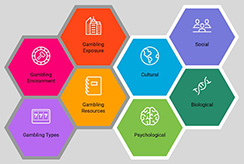 Abbott, M., Binde, P., Clark, L., Hodgins, D., Johnson, M., Manitowabi, D., . . . Williams, R. (2018). Conceptual framework of harmful gambling: An international collaboration, Third Edition. Guelph, Ontario, Canada: Gambling Research Exchange Ontario (GREO).
Although it is seen by many as a form of leisure and recreation, gambling can have serious repercussions for individuals, families, and society as a whole. The harmful effects of gambling have been studied for decades in an attempt to understand individual differences in gambling engagement and the life-course of gambling-related problems. In this publication, we present a comprehensive, internationally relevant conceptual framework of “harmful gambling” that moves beyond a symptoms-based view of harm and addresses a broad set of factors related to population risk, community, and societal effects. Factors included in the framework represent major topics relating to gambling that range from specific (gambling environment, exposure, types, and resources) to general (cultural, social, psychological, and biological). The framework has been created by international, interdisciplinary experts in order to facilitate an understanding of harmful gambling. It reflects the state of knowledge related to factors influencing harmful gambling, and serves a secondary purpose as a guide for the development of future research programs and to educate policy makers on issues related to harmful gambling. Gambling Research Exchange Ontario (GREO) (formerly the Ontario Problem Gambling Research Centre (OPGRC) located in Guelph, Ontario, Canada) has facilitated the development of the Conceptual Framework of Harmful Gambling and retains responsibility for keeping it up-to-date.
> PDF-version of the 3rd edition of the Conceptual Framework of Harmful Gambling
> Interactive version of the 3rd edition of the Conceptual Framework of Harmful Gambling
> French version (PDF): Cadre Conceptuel du Jeu Préjudiciable, Troisième Édition
Samuelsson, Eva, Kristina Sundqvist & Per Binde (2018). Configurations of gambling change and harm: Qualitative findings from the Swedish longitudinal gambling study (Swelogs). Addiction Research & Theory, 26(6): 514-524.
BACKGROUND: Gambling participation and problems change over time and are influenced by a variety of individual and contextual factors. However, gambling research has only to a small extent studied gamblers’ own perceptions of transitions in and out of problem gambling.
METHOD: Qualitative telephone interviews were made with 40 gamblers who had repeatedly participated in the Swelogs Swedish Longitudinal Gambling Study. The framework approach was used for analyses, resulting in a multiple-linkage typology.
RESULTS: Our analyses revealed four configurations of gambling: (a) stable low frequency with no or minor harm, (b) decreasing high frequency with occasional harm, (c) fluctuating with moderate harm, and (d) increasing high frequency with substantial harm. Natural recovery and return to previous levels of gambling intensity were common. Change occurred either gradually, as a result of adjustment to altered personal circumstances, or drastically as a consequence of determined decisions to change. Personal and contextual factors such as psychological well-being, supportive relationships, and meaningful leisure activities played a part in overcoming harmful gambling and keeping gambling on a non-problematic level. Gambling advertising was commonly perceived as aggressive and triggering.
CONCLUSIONS: The experience of harm is highly subjective, which should be taken into account when developing preventive measures. Considering the fluid character of gambling problems, help and support should be easily accessible and diversified. To repeatedly be interviewed about gambling and its consequences can contribute to increased reflection on, and awareness of, one’s own behaviours and the societal impacts of gambling.
Binde, Per, Ulla Romild & Rachel A. Volberg. 2017. Forms of gambling, gambling involvement and problem gambling: Evidence from a Swedish population survey. International Gambling Studies, 17(3): 490-507.
The purpose of this study was to explore the association between problem gambling (PG) and participation in different forms of gambling in order to elucidate relationships between PG, gambling involvement and gambling intensity. Using data from the first wave of the Swedish Longitudinal Gambling Study (Swelogs) (n = 4,991), the study tested four hypotheses, namely that (1) some forms of gambling are more closely associated with PG than other forms; (2) high gambling involvement is associated with PG; (3) gambling involvement is positively associated with the intensity of gambling; and (4) the relationship between gambling involvement and PG is influenced by the specific forms of gambling in which individuals participate. All four hypotheses were supported. More specifically, the study found that while many PGs regularly participate in multiple forms of gambling, half of PGs participate regularly in only one or two forms of gambling. The study concluded that some forms of gambling are more closely associated with problem gambling than other forms, and that gambling policy and regulation, as well as the development of responsible gambling initiatives, should focus on these forms.
This is the most cited article, as well as the second most read article, of all times in the journal International Gambling Studies, as of November 2022.
> Read the article
> Read a GREO Research Snapshot of the article
Binde, Per. 2016. Gambling-related employee embezzlement: A study of Swedish newspaper reports. Journal of Gambling Issues, No. 34: 12-31.
It is well-known that severe problem gambling may lead to economic crime. This study explored a particular type of such criminality: embezzlement committed by problem gamblers in the workplace. The aim was to gain knowledge about the extent of such criminality in Sweden and the sums of money involved. The method used was a media study of newspaper reports, complemented with information about help-seeking problem gamblers obtained in interviews with therapists specializing in problem gambling and with peer counsellors in mutual support societies of problem gamblers. The results showed that gambling-related embezzlement occurs in all branches of the economy where employees have access to money. The sums embezzled can be huge and the crimes sustained over several years. However, this varies across professional categories, with bank managers embezzling larger sums of money than others, and for longer, before being detected. Although Swedish newspapers report on average about one case a month of gambling-related employee embezzlement, the true prevalence is likely to be at least 10 times higher. More efforts should be made to prevent embezzlement and other gambling-related harms in the workplace.
Binde, Per. 2016. Gambling-related embezzlement in the workplace: A qualitative study. International Gambling Studies, 16(3): 391-407.
People with severe gambling problems typically first spend all their available money on gambling and then resort to borrowing, selling personal property and other ways of procuring more money for gambling. Some problem gamblers commit economic crimes. This investigation examined gambling-related embezzlement in the workplace, an aspect of problem gambling that may severely harm the gambler, significant others and the employer. The methods used are the study of newspaper articles and qualitative interviews with 18 informants, including professionals in workplace security and drug-use prevention, therapists specializing in problem gambling treatment, counsellors from mutual support societies, and recovered problem gamblers who had embezzled. Gambling-related embezzlement often progresses in a characteristic sequence shaped by specific processes in which the gambler’s thoughts and emotions interact systemically with the monetary losses caused by participating in commercial gambling and the opportunity to embezzle money in the workplace. In this study, criminological theory of white collar crime usefully complemented psychological theories of problem gambling. It is concluded that a processual perspective, in addition to consideration of psychological and environmental factors, is valuable for understanding the progression to severe problem gambling.
This is one of the ten most read articles of all time in the journal International Gambling Studies, as of November 2022.
Binde, Per. 2016. Preventing and responding to gambling-related harm and crime in the workplace. Nordic studies on alcohol and drugs, 33(3), 247–266.
AIMS – Problem gambling, even if it occurs in leisure time, can cause harm in the workplace. Problem gamblers are preoccupied with gambling and often suffer from psychiatric and psychosomatic symptoms caused by their excessive gambling. This may lead to inefficiency at work and absenteeism. Severe gambling problems typically lead to a constant need for money, which may result in theft of money or goods from the workplace and in embezzlement. This paper outlines measures to prevent and respond to gambling-related harm and crime in the workplace. METHODS – A review of the literature and qualitative interviews with therapists specializing in problem gambling treatment, peer counselors from mutual support societies, recovered problem gamblers who have embezzled, and professionals working in workplace crime security and the prevention of alcohol, drug and gambling harm. RESULTS – Important measures in preventing and responding to gambling harm in the workplace include: substance use and gambling policy, problem gambling awareness, attention to signs of gambling-related harm, control functions, appropriate responses to harmful gambling, and rehabilitation. CONCLUSION – The workplace should play a greater role in the universal, selective and indicated prevention of problem gambling.
> A popular science web article (in Swedish) about the study is published on the popNAD website – read it here.
Abbott, Max, Per Binde, Luke Clark, David Hodgins, David Korn, Alexius Pereira, Lena Quilty, Anna Thomas, Rachel Volberg, Douglas Walker & Robert Williams. 2015. Conceptual Framework of Harmful Gambling: An International Collaboration (Revised Edition). Guelph, Ontario, Canada: Gambling Research Exchange Ontario (GREO).
The first edition of the Conceptual Framework of Harmful Gambling was published in 2013. A revised and enlarged edition was published in the autumn of 2015 and a thoroughly revised third edition in 2018. The Conceptual Framework is now sponsored by the Gambling Research Exchange Ontario (GREO).
> PDF-version of the 3rd edition of the Conceptual Framework of Harmful Gambling
> Interactive version of the 3rd edition of the Conceptual Framework of Harmful Gambling
Binde, Per & David Forsström. 2015. The Swedish translation of DSM-5 “Gambling Disorder”: Reflections on nosology and terminology. Nordic Studies on Alcohol and Drugs, 32(2): 219-226.
We discuss the translation into Swedish of the term Gambling Disorder (GD) in the fifth edition of the Diagnostic and Statistical Manual of Mental Disorders (DSM-5). Translations and adaptions of psychiatric classifications across languages and cultures are not just a technical matter but require consideration of differences in conceptualisation of mental conditions and behaviours perceived to be harmful or undesirable. Psychiatric nosology is a taxonomic system in which mental disorders are classified and labelled. In themselves, the labels suggest the character of specific disorders. As components in a system, the labels distinguish disorders from each other and help to place them in a structure that reflects psychiatric theories. The names of the labels are chosen mainly on the basis of the meanings and associations they have in the field of psychiatry. However, the meanings and connotations of the names in everyday language and in various parts of society are also considered – there is a “dialectic between categories and experience” (Lee, 1996). This dialectic is part of the societal context in which psychiatry is embedded; the etiology, symptomatology, treatment and overall perception of psychiatric disorders are influenced by moral judgements, social norms, cultural values and institutional structures specific to societies and cultures. We first briefly outline the revisions in DSM-5 with regard to GD. Then we discuss the challenges in translating “gambling” and “disorder” into Swedish, given the differences in the semantic fields of these terms in Swedish compared to English. Finally, we comment on the suitability of the term “hasardspelsyndrom” – which is the translation into Swedish of GD – from a theoretical perspective, in the context of Swedish health policy and how it might influence the discourse surrounding gambling in everyday language.
Binde, Per. 2014. Games of life and death: The judicial uses of dice in eighteenth and nineteenth-century Sweden. UNLV Gaming Research & Review Journal, 18(1): 1-23.
Gambling studies should take a broad view of the field and consider activities that are not strictly gambling but similar to it, such as cleromancy and secular uses of drawing of lots, to give us perspective on societal and cultural aspects of gambling. This paper presents historical data on judicial uses of throwing dice in eighteenth and nineteenth-century Sweden. The focus is on cases of manslaughter with multiple perpetrators who were considered equally guilty and were forced by the criminal court to throw dice to determine who should be executed and who should receive lesser penalties. Three principles are distinguished in judicial uses of throwing dice—cost-effective deterrence, lottery of pardon, and guilt-revealing cleromancy—and similarities and dissimilarities to present commercial gambling are discussed. It is argued that the polythetic notion of family resemblance is useful in gambling studies since it does not impose fixed conceptual boundaries between activities that share many elements.
> Article information
> Download the article
Binde, Per. 2014. Gambling advertising: A critical research review. London: The Responsible Gambling Trust.
This report provides a critical review of research on gambling advertising, with particular attention to studies that concern the impact of such advertising on participation in gambling and the prevalence of problem gambling. Methodological issues and the potential of research approaches to produce reliable and meaningful results are discussed, providing a basis for recommendations about future studies. The report has been commissioned by the Responsible Gambling Trust in the UK and the aim is that the Trust, other organizations and researchers will find the report useful when forming research priorities and planning studies. More generally, the report serves as an introduction to the topic of gambling advertising. It is concluded that it is very difficult, if not impossible, to assess how many people gamble excessively because of direct or indirect influence from advertising. However, the nature and mechanisms of the impact of gambling advertising, as well as other aspects of it – such as its volume and the ethical questions that it raises – are possible to study in a variety of ways. Thus while absolute extent of impact is difficult to assess, it is possible to study the relative impact on various groups of people by different forms of advertising. Such research results are valuable for policy making, regulation and the responsible marketing of gambling as they differentiate between relatively harmless and relatively risky advertising.
> Download the report
Based on the bibliography in the RGT report, I have compiled an updated and stand-alone bibliography of empirical studies on gambling advertising. It is available here.
Binde, Per. 2014. Gambling in Sweden: The cultural and socio-political context. Addiction, 109(2): 193-198.
Aim To provide an overview, with respect to Sweden, of the cultural history of gambling, the commercialization of gambling, problem gambling research, the prevalence of problem gambling and its prevention and treatment. Method A review of the literature and official documents relating to gambling in Sweden; involvement in gambling research and regulation. Results Gambling has long been part of Swedish culture. Since about 1980 the gambling market, although still largely monopolistic, has been commercialized. At the same time, problem gambling has emerged as a concept in the public health paradigm. Debate regarding whether or not Sweden’s national restrictions on the gambling market are compliant with European Community legislation has helped to put problem gambling on the political agenda. Despite expanded gambling services, the extent of problem gambling on the population level has not changed significantly over the past decade. Conclusions The stability of problem gambling in Sweden at the population level suggests a homeostatic system involving the gambling market, regulation, prevention and treatment and adaption to risk and harm by gamblers. We have relatively good knowledge of the extent and characteristics of problem gambling in Sweden and of how to treat it, but little is known of how to prevent it effectively. Knowledge is needed of the effectiveness of regulatory actions and approaches, and of responsible gambling measures implemented by gambling companies.
Abbott, Max, Per Binde, David Hodgins, David Korn, Alexius Pereira, Rachel Volberg & Robert Williams. 2013. Conceptual Framework of Harmful Gambling: An International Collaboration. Guelph, Ontario, Canada: The Ontario Problem Gambling Research Centre (OPGRC)
The first edition of the Conceptual Framework of Harmful Gambling was published in 2013. A revised and enlarged edition was published in the autumn of 2015 and a thoroughly revised third edition in 2018. The Conceptual Framework is now sponsored by the Gambling Research Exchange Ontario (GREO).
> PDF-version of the 3rd edition of the Conceptual Framework of Harmful Gambling
> Interactive version of the 3rd edition of the Conceptual Framework of Harmful Gambling
Binde, Per. 2013. ”Spelberoende” och relaterade begrepp: Vad betyder de egentligen? Lotteriinspektionens skriftserie 4, 19-38.
[“Pathological gambling” and related terms: What do they actually mean?]
[Abstract translated from Swedish and adapted for the international context] “Pathological gambling” and similar terms, such as “problem gambling” and “excessive gambling”, are in Sweden used with different meanings. We come across these terms in official texts and in mass media. Sometimes the authors are not fully aware about what the terms usually means. Other times, the reader is likely to interpret the words in a way that is not consistent with what is intended. Concepts and statistical data from various studies, relating to the prevalence of problem gambling, are also presented in media and often used in ways that do not correspond very well to their scientific meanings. All this contributes to confusion about gambling issues and misunderstandings in discussions and debates. This article intends to clarify key concepts, used in Sweden, in the field of problem gambling. It is written primarily for lay people and has two main parts. The first section of the article deals with concepts related to problem gambling and negative consequences of gambling; the second section is about key concepts in scientific studies of the population prevalence of problem gambling.
> Read the article (in Swedish)
 Binde, Per, Jessika Svensson & Anders Tengström. 2013. Spelberoende: Forskning för en hållbar spelpolitik. (Forskning i korthet, nr. 2.) Stockholm: Forskningsrådet för Arbetsliv och Socialvetenskap.
[Problem gambling: Research for a sustainable gambling policy]
This report in Swedish summarizes research on problem gambling internationally and in Sweden. The report identifies important research gaps that need to be filled. A general conclusion is that an evidence based gambling policy is to some extent already possible. However, in order to develop gambling studies in Sweden and fill the gaps in research there is a need for a new funding structure that would facilitate long-term strategic building up of knowledge about gambling and problem gambling. The report is included in the series “Research in brief”, published by the Swedish Council for Working Life and Social Research (FAS).
Binde, Per. 2013. Why people gamble: A model with five motivational dimensions. International Gambling Studies, 13(1): 81-97.
A motivational model of gambling participation is presented. The model comprises five motivational dimensions: the dream of hitting the jackpot and transforming one’s life, social rewards, intellectual challenge, mood change induced by playing, and – the fundamental motive for all gambling – the chance of winning. The model is primarily applicable to leisure gambling in contemporary western societies, but also helps us understand problem gambling. The model integrates the wide variety of motives individuals have for gambling and makes it possible to understand the specific appeal of gambling relative to other leisure activities. Gambling taps into human biopsychology, easily evokes powerful psychological processes, and connects with profound cultural meanings.
This is one of the five most cited articles of all time in the journal International Gambling Studies, as of November, 2022.
> Link to journal article • “Post-print” version (free)
Binde, Per. 2012. Att bedöma spelformers riskfylldhet: En metodologisk diskussion i ett regleringsperspektiv. Lotteriinspektionens skriftserie, No. 2, 1-12.
[“How to assess the riskiness of various forms of gambling: A methodological discussion from a regulatory perspective”]
Some forms of gambling are more closely associated with problem gambling than others and are therefore considered to be more risky and harmful. Indications of the relative harmfulness of forms of gambling can be obtained from three principal sources of information: statistics regarding those who seek help for problem gambling, statistics from studies of the prevalence of problem gambling among the general population or part thereof, and risk assessment tools. The advantages and limitations of these three sources of information are discussed. It is concluded that when estimates are going to be made of the relative harmfulness of various forms of gambling, from a regulatory perspective it is advantageous to use information from the three sources in combination.
> Link to journal article (in Swedish)
Binde, Per. 2012. A mutual support group for young problem gamblers. International Journal of Mental Health and Addiction, 10(4): 524-536.
A Swedish mutual support group for young problem gamblers is described and discussed. During the study period, 116 weekly meetings occurred, usually involving six to ten participants; in total, 69 problem gamblers (66 male and three female), aged 17–25, and 23 partners and friends attended the meetings. Half the gamblers had problems with Internet poker, one fifth with electronic gambling machines, and the rest with other forms of gambling and computer gaming. Nearly half the problem gamblers participated in under five mutual support meetings, while just over a third attended ten or more meetings. Gambling problems ceased or lessened among most participants in ten or more meetings. In some cases, attending just one or a few meetings had a positive impact on the problems. This mutual support group provides relatively effective help to adolescents and young adults with gambling problems, offering a valuable alternative and complement to professional treatment.
Link to journal article • “Post-print” version (free)
Binde, Per. 2012. A Swedish mutual support society of problem gamblers. International Journal of Mental Health and Addiction, 10(4): 512-523.
Mutual support societies for problem gamblers have existed in Sweden for 20 years. They have helped more people with gambling problems than any other institution inside or outside the Swedish health care system. This paper outlines the background of these societies and describes the meetings of one of them. Data come from interviews with members of a local society and participation in mutual support meetings. It is argued that these mutual support societies provide help in a variety of ways and in all phases of recovery from gambling problems. In particular, they help people form personal narratives about the origin, progression, and resolution of their problems, narratives that give insight and guide recovery. These mutual support societies are valuable complements and alternatives to professional treatment.
Link to journal article • “Post-print” version (free)
 Binde, Per. 2011. Trotting territory: The cultural realm of Swedish horse betting. In P. Raento & D. Schwartz (eds), Gambling, Space, and Time: Shifting Boundaries and Cultures. Reno: University of Nevada Press.
About the chapter Trotting territory: The cultural realm of Swedish horse betting
Human beings in social interaction create life-worlds with shared symbols, meanings, and values. Some forms of gambling, among them horse betting, therefore tend to evolve into bounded cultural domains with specific beliefs, norms, and traditions. Gambling becomes the core of a world-building activity. This chapter concerns one such cultural realm established by gambling – the one created and re-created at the Åby trotting track in Sweden at the days of racing. The study builds on participant observation and analyses the social interactions and cultural meanings that structure people’s experience of Åby trotting track.
About the book
“The eight essays in Gambling, Space, and Time use a global and interdisciplinary approach to examine two significant areas of gambling studies that have not been widely explored—the ever-changing boundaries that divide and organize gambling spaces, and the cultures, perceptions, and emotions related to gambling. The contributors represent a variety of disciplines: history, geography, sociology, anthropology, political science, and law. The essays consider such topics as the impact of technological advances on gambling activities, the role of the nation-state in the gambling industry, and the ways that cultural and moral values influence the availability of gambling and the behavior of gamblers. The case studies offer rich new insights into a gambling industry that is both a global phenomenon and a powerful engine of local change.” (University of Nevada Press)
Contributors
Per Binde, Larry Gragg, Sytze F. Kingma, Steven Andrew Light, Kathryn L. R. Rand, Pauliina Raento, David G. Schwartz, and Denise von Herrmann.
Reviews
“This book extends the available research on gambling, and therefore makes a significant contribution to the literature. There is no doubt that the contributors have done careful and extensive original research.”
– James Smith, author of The Business of Risk: Commercial Gambling in Mainstream America.
“This book looks at gambling spaces from a number of perspectives: legal, political, social, and geographic; and discusses how such spaces have evolved over time. The essays provide insights into how this rapidly expanding but controversial activity has evolved in America and Europe, and where it will emerge in cyberspace.”
– William R. Eadington, Director, Institute for the Study of Gambling and Commercial Gaming, University of Nevada, Reno
Order the book from:
• The University of Nevada Press
• The Swedish bookseller Adlibris
Binde, Per. 2011. What are the most harmful forms of gambling? Analyzing problem gambling prevalence surveys. CEFOS Working Papers 12.
Eighteen national prevalence surveys of problem gambling (PG), most of them from Europe, were analyzed to assess the relative harmfulness of various forms of gambling. It was found that interactive Internet gambling, casino gambling, electronic gaming machines, and high-stakes unregulated/illegal gambling are often relatively closely associated with PG, while lotteries and instant lotteries appear relatively harmless. Other forms of gambling—sports pools, bingo, horse betting, and sports betting—are typically relatively moderately associated with PG. This paper discusses the possibilities and limitations of assessing the harmfulness of various forms of gambling by analyzing prevalence survey data. It is concluded that although such analyses yield valuable insights, they should be complemented by other sources of information, such as statistics on the gambling activities of those seeking help for PG and qualitative studies of problem gambling.

Binde, Per. 2010. Sjutton också, udda igen! Frank Heller och Rouletten. In Frank Heller och hasarden, red. G. Wessberg. Lund: Pelotard Press
[“Frank Heller and the roulette”]
High stakes gambling is a recurrent theme in the Swedish writer Frank Heller’s short stories and books. This essay is about Heller’s attempt to get rich by playing the roulette in the casino of Monte Carlo in 1912, which ended in economic ruin when a series of no less than seventeen odd numbers occurred. The mathematical and statistical properties of roulette systems are explained. Starting out from an aphorism by the Spanish writer Carlos Ruiz Zafón – “Coincidences are the scars of fate” – the implications of this event on the body of Heller’s writings are discussed. The essay is published in an anthology on the theme of gambling in Heller’s literary works.
 Binde, Per. 2010. Syna korten: En insats mot spelproblem bland unga. Hedemora: Gidlunds. [“‘Showdown Time: A Response to Adolescent Problem Gambling”]
Online poker and other games on the internet have become popular among young people. Many spend a lot of time and money gambling. Also sports betting, slot machines and video games create problems. The project Showdown Time is a response to problem gambling among young people in Gothenburg. This social project has in its preventive effort reached out to thousands of young people. In a mutual support group, help has been provided to many young problem gamblers and their families. This book describes and analyzes the groundbreaking work of the project Showdown Time. It gives a picture of problem gambling among young people today. We learn how the lecturers from Showdown Time capture young people’s attention and get them to absorb the message about the risks of gambling. The reader will get a unique insight into how a mutual support group works and a detailed account of the help it provides to its participants. The book is targeted at anyone who is interested in social work, addiction problems and youth issues.
Review in Swedish • Buy the book • Publisher’s presentation
 Binde, Per & Jakob Jonsson (eds). 2010. Spelberoendes riksförbund 10 år: En jubileumsskrift. Östersund: Statens folkhälsoinstitut.
● Binde, Per & Jakob Jonsson, 2010. Inledning: Spelberoendes riksförbund tio år. In Spelberoendes riksförbund 10 år: En jubileumsskrift, eds P. Binde & J. Jonsson. Östersund: Statens folkhälsoinstitut.
● 2010, Per, 2010. De svenska spelberoendeföreningarna. In Spelberoendes riksförbund 10 år: En jubileumsskrift, eds P. Binde & J. Jonsson. Östersund: Statens folkhälsoinstitut.
These publications relate to an edited jubilee book celebrating the tenth anniversary of the Gambling Addicts’ National Association. The book includes contributions from people within the association, academics, as well as people from the gaming sector who have co-operated with the association. The sixteen chapters of the book give a comprehensive and well-informed picture of gambling problems in Sweden and how the local mutual support groups within the Association help problem gamblers and their family members.
 Binde, Per. 2010. ‘You Could Become a Millionaire’: Truth, Deception, and Imagination in Gambling Advertising, in S. Kingma (ed.) Global Gambling: Cultural Perspectives on Gambling Organizations. London: Routledge.
This book chapter examines psychological and rhetorical devices commonly used in gambling advertising, and discusses to what extent these can be regarded as misleading. I conclude that it is difficult to distinguish sharply between advertising of gambling products that misleads consumers and that which does not. Responsible gambling provision should mean that gambling companies do not publish advertising that is even remotely misleading, and that they are responsive to public opinion regarding the truthfulness, content and tone of their advertising. Gambling, being an activity sustained by imagery and multifaceted cultural meanings, provides ample material for attractive themes in advertising. There is thus no need for gambling companies to market their products using dubious half-truths concerning the chances of winning. Less focus on money and more emphasis on the culturally meaningful elements of gambling would make deception in gambling advertising less of a controversial subject.
Binde, Per. 2009. Exploring the impact of gambling advertising: An interview study of problem gamblers. International Journal of Mental Health and Addiction, vol. 7(4): 541-554.
This study qualitatively explored the impact of gambling advertising on problem gambling by interviewing twenty-five people with current or past gambling problems. Interviews were relatively long and involved the participants’ viewing numerous examples of gambling advertising. A quarter of the participants reported that gambling advertising had no impact on their problems, slightly over half of them reported that advertising had a marginal impact, and one fifth reported a tangible impact. However, none considered advertising to be a main cause of their gambling problems. The negative self-perceived impact was primarily that advertising triggered impulses to gamble. Advertising thus increased already high involvement in gambling and/or made it harder to stick to a decision to gamble less or not at all.
Link to journal article • “Post-print” version (free)
 Binde, Per. 2009. Gambling motivation and involvement: A review of social science research. Östersund: Statens folkhälsoinstitut.
This report reviews the academic literature on social, economic and cultural research on gambling. It sums up what the literature says about the motives people have for gambling and the factors that influence their degree of involvement in gambling. Suggestions are made as to the usefulness of this knowledge for studies on problem gambling, which often rely on medical concepts of excessive gambling as pathology. This review may thus be helpful to scholars, health practitioners and policy makers who deal with problem gambling issues, and of some interest also to those with a more general desire to learn more about why people gamble.
Binde, Per. 2009. Vilka är de mest riskfyllda spelen? En analys av befolkningsstudier av spelproblem. CEFOS Rapport 2009:1.
[What are the most risky forms of gambling? An analysis of problem gambling prevalence studies]
This report in Swedish presents the results of an analysis of the association between different forms of gambling and problem gambling. Eighteen prevalence studies, most of them from Europe, are analyzed. It is found that the most risky forms of gambling are unregulated high stakes gambling, casino games, electronic gambling machines and interactive internet games. The least risky forms are traditional lotteries and instant lotteries. Horse betting, sports betting, sports pools and bingo are forms with a moderate risk for gambling problems. While this is the general picture, the riskiness of forms of gambling is relative rather than absolute, varies between cultures and legislations, and depends on factors such as regulation, the design of particular games, and the selection of games available on the gaming market. A theoretical model is presented – including the factors emotional effect of playing, requirements for play, and the game’s integration into the surrounding society – that accounts for the varying strength of association between gambling problems and forms of gambling, as it emerge in prevalence studies.
Download the report (in Swedish) • Download a revised and abridged version in English
Binde, Per. 2007. The good, the bad and the unhappy: Cultural meanings of newspaper reporting on jackpot winners. International Gambling Studies, vol. 7(2): 213-232.
Accounts of jackpot winners and big gambling wins are common in Swedish newspapers. Analysis of over 2000 such newspaper articles reveals that their content is structured according to specific themes and cultural topics. Four such topics are identified: wealth as a test of morals and character, the social impact of wealth, the just and good world, and luck and the occult. Culturally structured narratives like these – which elaborate on mythological and moralistic schemes of good and evil, rewards and punishments, and which concern questions of human nature and social values – have a long history in folk tradition and in Christian moral teachings. Jackpot wins provide a discursive realm for moral and existential questions that, to some extent, fills a void left by the decline of traditional folklore and formal religion. Apparently, this discourse stimulates interest in games and constitutes one of the cultural roots of contemporary gambling.
Link to journal article • “Post-print” version (free)
 Binde, Per. 2007. Spelreklam och spelberoende: En intervjustudie. Östersund: Statens folkhälsoinstitut.
[Gambling advertising and problem gambling: An interview study]
The premise for the study presented in this book was that problem gamblers can to some extent tell what influence gambling advertising has had on their problems. No other such investigation had previously been conducted in Sweden or elsewhere. The study was based on relatively long and exhaustive interviews with twenty-five individuals with present or past severe gambling problems. The study also accounts for how the individual interviewed more generally react when confronted with gambling advertising and what thoughts they have on the promotion of gambling in Sweden. The opinions and experiences presented are those of persons who have years of experience of gambling problems – their own and those of others – and can therefore be valuable to those, in the gambling industry or elsewhere, who have an interest in responsible provision of gambling. Advertising regulation issues are discussed in the light of the findings of the study.
Download the book • Article in English • Article in English (“Post print” version, free)
Binde, Per. 2007. Selling dreams – causing nightmares? On gambling advertising and problem gambling. Journal of Gambling Issues, vol. 20: 167-192.
A review of the relevant academic literature leads to the conclusion that there are no reliable estimates of the impact of gambling advertising on the extent of problem gambling. Drawing on available facts, it can be inferred that gambling advertising does add to problem gambling, but that its impact is smaller than those of other influential factors. Thus, alarming claims that gambling advertising substantially increases problem gambling and reassuring statements from gambling companies that advertising merely affects market shares and has no impact on the prevalence of problem gambling both appear to be erroneous. Examining possible methods for measuring the small impact of advertising on problem gambling indicates that this is a difficult research task. Gambling providers are advised to avoid publishing advertising that elaborates on features of gambling known to relate to problem gambling. The controversial nature of gambling advertising is illustrated by the case of Sweden, where such advertising and its impact on problem gambling has been hotly debated in the past decade.
Binde, Per. 2007. Gambling and Religion: Histories of Concord and Conflict. Journal of Gambling Issues, vol. 20: 145-165.
This paper discusses the diverse relationships between gambling and religion in various societies and at various times in history, and suggests a theoretical model for how these relationships can be understood. It is argued that gambling and religion have certain elements in common: notions of the unknown, mystery, fate, and destiny, as well as imagery of suddenly receiving something of great value that changes life for the better. In many traditional cultures gambling has existed in concord with polytheistic and animistic religion; gambling and religion go well together precisely because of the elements they have in common. Monotheistic religions that claim authority in religious and transcendental matters, however, tend to denounce gambling and this disapproval has been fueled by a conception that gambling offers a wicked alternative to certain religious notions and experiences. The elements that gambling and religion share have thus become a source of conflict.
Binde, Per. 2007. Report from Sweden: The first state-owned Internet poker site. Gaming Law Review, vol. 11(2): 108-115.
The first state-owned Internet poker site was launched in March 2006 in Sweden. This paper describes the political and public debate that flared up when plans for the poker site became known, the rationale for the Swedish government granting permission to the site, and the possible implications of this decision for Swedish lottery regulation vis-à-vis EU law. Finally, some speculations on the future of Swedish gambling regulation are made.
Link to journal article • “Post-print” version (free)
Binde, Per. 2005. Gambling, Exchange Systems, and Moralities. Journal of Gambling Studies, vol 21(4): 445-479.
History and ethnography show us that, across societies of the past and present, gambling varies considerably with respect to its organization, social meanings, and how it is regarded in moral terms. This paper presents a basic scheme for analyzing the relationship between gambling and society. A theoretical starting point is that reciprocity is fundamental to social and economic systems. An anthropological theory of exchange systems makes a broad distinction between a structural dimension (generalized versus balanced reciprocity) and a normative dimension (from voluntary to involuntary). A model of four basic forms of reciprocity, each having a characteristic exchange mode and morality, can thus be constructed. Gambling is here understood as an exchange system embedded in the reciprocal orders of society and having a necessary relationship to these; it can take on the characteristics of such an order or it can be regarded as conflicting with it. Much of the variation in the form and morality of gambling therefore emerges as systematic and explainable by a theory of forms of reciprocal exchange.
Link to journal article • “Post-print” version (free)
Binde, Per. 2005. Spel i ett antropologiskt perspektiv. Socialt Perspektiv, nr 1: 7-24.
This article outlines how gambling can be understood as a cultural and social phenomenon from an anthropological point of view.
 Binde, Per. 2005. Att sälja en dröm: Om spelreklam och dess påverkan. Stockholm: Statens folkhälsoinstitut.
[Selling Dreams: On the Effects of Gambling Advertising]
Gambling advertising has become a controversial subject in Sweden, as is also the case in several other European countries as well as in the United States. It is debated to what extent advertising contributes to problem gambling, and if much of gambling advertising should be regarded as deceptive and unethical. This book in Swedish presents facts on gambling advertising in Sweden and reviews the academic literature on the subject. It discusses the main issues that have been raised with respect to gambling advertising in the public debate and offers suggestions for future research.
Binde, Per. 2005. Gambling across cultures: Mapping worldwide occurrence and learning from ethnographic comparison. International Gambling Studies, vol. 5(1): 1-27
This paper first maps the distribution of indigenous gambling in cultures around the world. On the basis of extensive ethnographic and historical evidence, it is concluded that gambling is not a universal phenomenon; prior to the era of European colonization, non-gambling societies appears to have covered large areas of the globe. The pattern of gambling and non-gambling peoples and nations invites speculation and investigation. The second part of the paper reviews and critically discusses statistical cross-cultural studies that have aimed to uncover factors that promote or restrain the playing of games of chance and the practice of gambling. Some of these factors, which allow us to predict to a certain extent the presence and intensity of gambling in societies, are: the presence of commercially used money, social inequality, societal complexity, and the presence of certain kinds of competitive inter-tribal relations.
Articles and works on other topics than gambling
- Binde, P. (1999). Bodies of Vital Matter: Notions of Life Force and Transcendence in Traditional Southern Italy. Acta Universitatis Gothoburgensis.
- Binde, P. (1999). Nature versus city: Landscapes of Italian Fascism. Environment and Planning D: Society and Space, 17(6), 761-775.
- Binde, P. (2000). Case studies of railway controversies. In Å. Boholm (Ed.), National Objctives – Local Objections: Railroad Modernization in Sweden (pp. 39-68). Livréna.
- Binde, P. (2000). The legal framework for railway construction. In Å. Boholm (Ed.), National Objctives – Local Objections: Railroad Modernization in Sweden (pp. 35-38). Livréna.
- Binde, P. (2000). Risk discourse: The rhetoric of railway hazards in siting controversy. In M. P. Cottam, D. W. Harvey, R. P. Pape, & J. Tait (Eds.), Foresight and Precaution (Proceedings of ESREL 2000, SARS and SRA-Europe Annual Conference), vol. 2 (pp. 1061-1066). A.A. Balkema.
- Binde, P. (2000). The Swedish railroads: A brief historical background. In Å. Boholm (Ed.), National Objctives – Local Objections: Railroad Modernization in Sweden (pp. 26-34). Livréna.
- Binde, P. (2000). Tracks, trains and tunnels: Ideas and concerns about risk. In Å. Boholm (Ed.), National Objctives – Local Objections: Railroad Modernization in Sweden (pp. 135-152). Livréna.
- Binde, P. (2001). Nature in Roman Catholic tradition. Anthropological Quarterly, 74(1), 15-26.
- Binde, P. (2002). Risk som diskurs. In Å. Boholm, S. O. Hansson, J. Persson, & M. Peterson (Eds.), Osäkerhetens horisonter: Kulturella och etiska perspektiv på samhällets riskfrågor (pp. 111-137). Nya Doxa.